
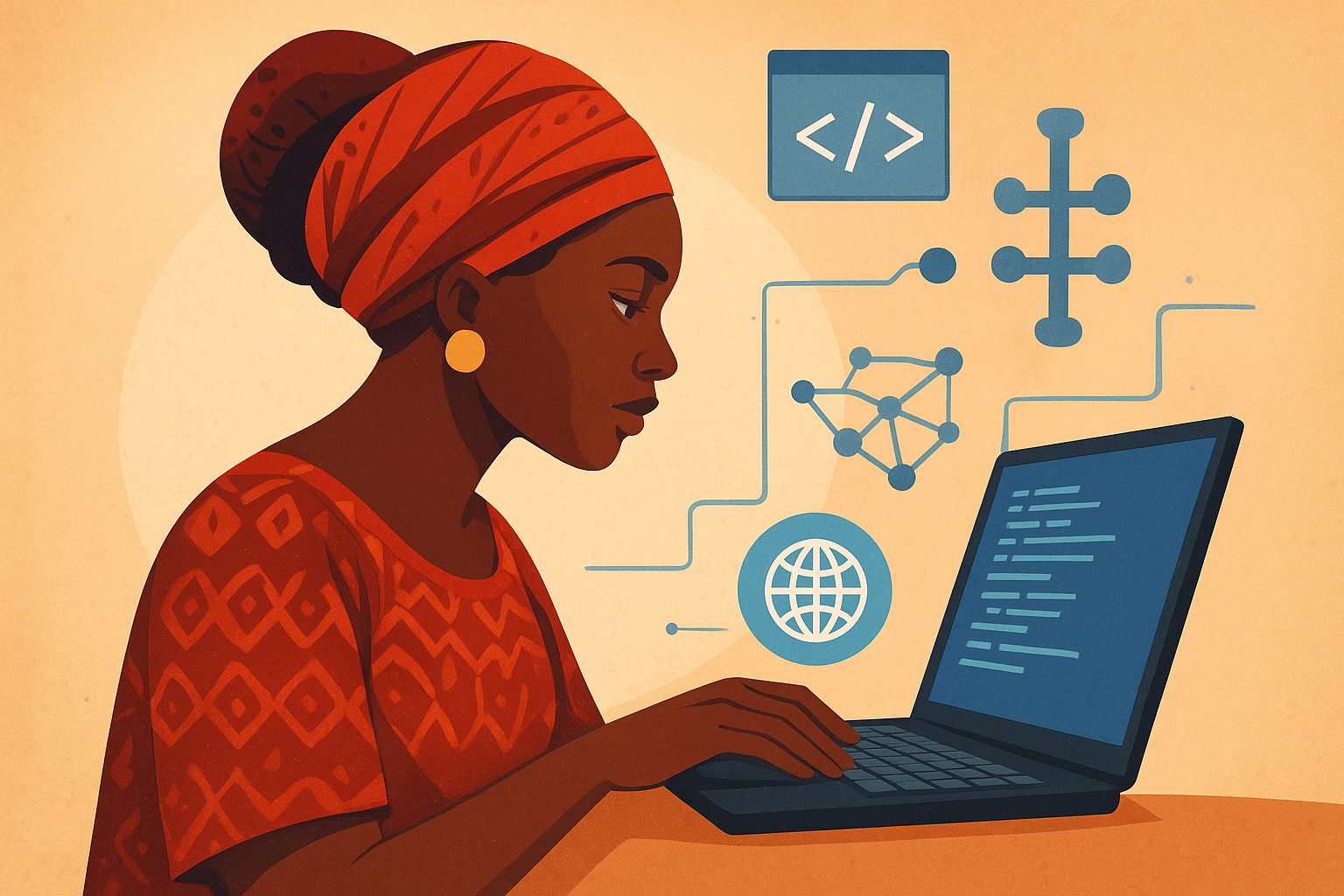
There’s a popular misconception that culture is something ancient and dusty, best preserved behind glass or romanticised in folk festivals. Igbo heritage refuses to sit quietly in that manner. It’s not a decorative past; it’s a living codebase, an adaptive framework for how to live meaningfully in a hyperconnected world. The Igbo spirit of ịgbalịsi onwe (self-determination), ịbụ onye mmadụ (humanness), and ịmụ na imegharị (learning and innovation) are not old slogans. They are the original firmware for a civilisation that prized creativity, decentralised decision-making, and resilience principles that are the backbone of the digital age.
The Igbo Operating System: Decentralization as Design
Before blockchain, there was Igbo village democracy. No kings, no central authority, just consensus, accountability, and distributed power. Every village was its own node, contributing to a larger network of communities linked by shared values and customs.
That’s DAO logic (Decentralized Autonomous Organization), centuries before Silicon Valley stumbled on the term.
Imagine applying that to digital governance: community-driven platforms built around ịgọzi mmadụ (blessing humanity) instead of ad revenue. That’s not nostalgia, it’s a blueprint for digital sovereignty.
2. The Market as a Social Algorithm
The Ahịa (market) wasn’t just a place to trade goods. It was an ecosystem of ethics, storytelling, and innovation. Market days were data exchanges, news feeds, and mentorship hubs rolled into one.
In digital terms, the Igbo market model could power ethical e-commerce, where trust and communal reputation serve as authentication rather than faceless star ratings.
Imagine a blockchain-powered Ahịa Ọhụrụ—a digital market that encodes integrity, collective growth, and fair exchange. That’s culture-as-code.
3. The Principle of Ụmụnna: Collective Intelligence Before the Cloud
Ụmụnna means “children of one father,” but it extends beyond bloodlines to shared purpose. It’s a social network without algorithms, a mutual support system that rewards contribution, empathy, and accountability. In today’s terms, it’s an open-source model of community building. The wisdom of ụmụnna could inspire digital platforms for mentorship, cooperative funding apps, or AI systems trained on communal rather than individualistic ethics.
The Igbo worldview doesn’t just fit the digital era; it upgrades it, turning cold tech into something deeply human.
4. Ịmụta ka ịzụ anụ: Learning Is Better Than Buying
The Igbo believe knowledge is the most valuable form of wealth. That’s why apprenticeships (Igba-boi) thrived: a data-sharing protocol long before Wi-Fi. The apprentice system created billion-naira entrepreneurs out of patience, trust, and rigorous skill exchange.
Modern translation? Peer-to-peer learning ecosystems, digital mentorship platforms, and knowledge DAOs that replicate the Igba-boi spirit, where success is measured not by possession but by transformation.
5. Chi and Self-Programming
At the center of Igbo metaphysics is Chi, your personal divine spark, the fragment of destiny that defines your path. It’s like your unique program key in the vast operating system of life.
Recognizing and aligning with one’s Chi in a digital context means crafting a values-based digital identity, one where technology amplifies purpose, not distraction. It’s a reminder that your feed, your code, your content, all of it, should reflect your Chi, not someone else’s algorithmic manipulation.
The Future Is Coded in Proverbs
“Igbo enwe eze” (The Igbo have no king) was never rebellion for its own sake; it was a design principle. It meant every person is sovereign, and every idea must justify itself through merit, not hierarchy. In a digital century obsessed with “disruption,” the Igbo have always lived it.
So no, Igbo heritage doesn’t belong in a glass case. It belongs in UI design, community protocols, algorithmic ethics, and digital entrepreneurship. The ancestors were not only philosophers, they were system architects. They built a moral internet before there was electricity.
The task now isn’t preservation. It’s translation – turning ancestral wisdom into digital wisdom.
Because the future doesn’t erase tradition; it decodes it. And the Igbo code still runs -beautifully, efficiently, eternally.
Leave a Reply